How to create faceless YouTube history videos with Picsart Storyline

VIDEO EDITING4 minIntermediate

Turn history-style narrative prompts into publish-ready faceless videos with AI-generated scenes and narration setup.

Loading tutorial video

What you'll learn

  • Generate consistent AI characters across multiple scenes
  • Structure narrative prompts for historical storytelling
  • Add voiceover narration and background music
  • Export videos optimized for YouTube or Shorts

What is Picsart Storyline?

Picsart Storyline is a narrative-first video creation workflow for turning story prompts into connected visual scenes. You define the narrative beats, visual direction, and consistency rules, then refine the generated sequence into a publish-ready video.

Common use cases

  • Educational content: Ancient civilizations, historical events, biographical stories
  • YouTube Shorts: Quick historical facts, mystery stories, timeline explanations
  • Documentary-style narratives: Wars, inventions, cultural movements
  • Mythology and folklore: Legend retellings, ancient myths, cultural tales
  • Social media posts: Historical trivia, this-day-in-history clips
  • Podcast visuals: Add scenes to audio history content for video platforms

Create your faceless history video step by step

STEP 1: Open Picsart Storyline

  • On web: Open the Storyline link and start a new project from the current product surface.
Open Storyline tool

STEP 2: Write your narrative prompts

Structure your story in 4-8 scene prompts. Each prompt should describe one moment in the narrative:

  • Scene setting: Describe the location and time period clearly
  • Character details: Include age, clothing, and expression for consistency
  • Action or moment: What's happening in this specific scene
  • Visual style: Add keywords like 'cinematic', 'dramatic lighting', or 'historical painting style'
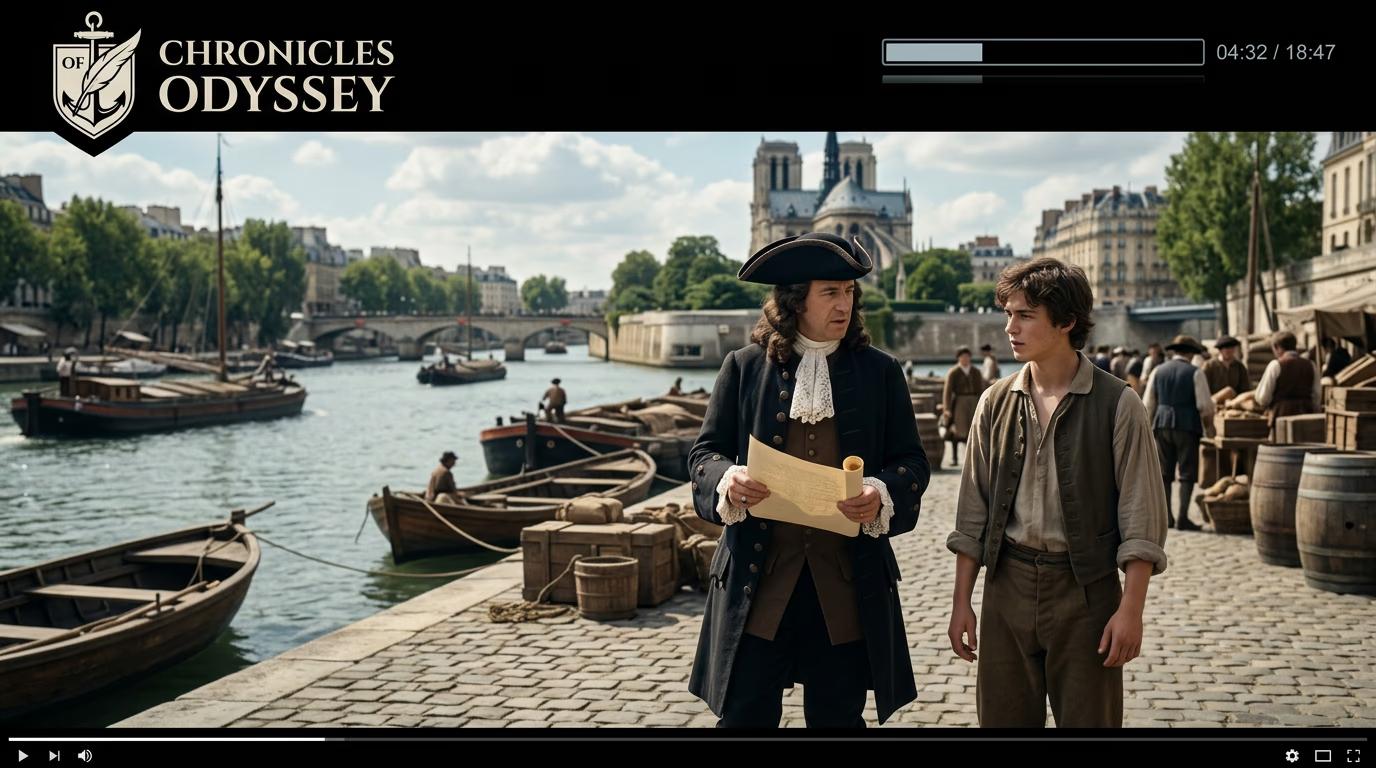
STEP 3: Generate scenes and add voiceover

Generate your scenes, review the sequence, and add narration or timing adjustments before export.

STEP 4: Review and export

Check that your video tells a clear story: Not satisfied with a scene? Regenerate individual frames or adjust prompts for better results.

  • Verify character consistency across all scenes
  • Check that voiceover timing matches scene transitions
  • Confirm aspect ratio matches your platform (16:9 for YouTube, 9:16 for Shorts)
Create history video

Tips for best results

💡 Use specific time periods in prompts

Instead of 'ancient times', write '1st century Roman Empire' or 'Medieval England, 1200s'. The AI generates more accurate clothing, architecture, and atmosphere when you provide specific dates or eras.

💡 Keep character descriptions identical

Copy-paste the exact same character description across scenes. Change only the action or setting. This helps the AI maintain visual consistency throughout your video.

💡 Script your narration before generating

Write your voiceover script first, then create scene prompts that match what you're saying. This prevents awkward mismatches between narration and visuals.

💡 Test different aspect ratios

Generate a 9:16 version for Shorts and a 16:9 version for main channel uploads. The same story can perform differently depending on format and platform.

Aspect ratio guide for video platforms

  • 16:9 (Horizontal): YouTube main videos, desktop viewing, educational content
  • 9:16 (Vertical): YouTube Shorts, TikTok, Instagram Reels, mobile-first content
  • 1:1 (Square): Instagram feed posts, Facebook posts, Twitter/X videos
  • 4:5 (Portrait): Instagram feed (portrait), Facebook feed videos

Frequently asked questions

Storyline availability can change by surface. Use the official Storyline link and your current Picsart account to confirm which creation options are available before you begin.

Use identical character descriptions in every prompt. Copy the exact same phrase—age, clothing, hair, facial features—and only change the action or background. For example: 'A 40-year-old Roman general in red armor and gold laurel crown' should appear word-for-word in each scene where that character appears.

Storyline generates multiple connected scenes with consistent characters and style, designed for video narratives. Regular AI image generation creates single, standalone images. Storyline also includes timeline editing, voiceover tools, and video export—everything needed to make a complete video, not just individual frames.

Pricing, limits, and export options can change over time. Check the current Storyline product surface and your account before relying on a specific scene count, export resolution, or access tier.

Ready to tell history?

Turn your narrative ideas into engaging faceless videos with AI-generated scenes and voiceover.

Start creating now