
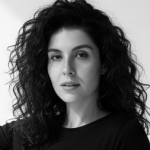

From finding my creative voice to winning Best European Film with Beneath the Surface.
Creativity has the power to turn personal experiences into stories that connect with people around the world. For Manchester-based mixed-media artist Loveartpix, that journey began with experimenting on Picsart and led to an extraordinary milestone: winning Best European Film at Italy’s Reale Film Festival for Beneath the Surface.
Created independently using Picsart’s creative tools, the film brings deeply personal experiences to life through powerful, dialogue-free visuals. In this guest story, Loveartpix shares how art became a way to communicate, how an exhibition idea evolved into an award-winning film, and why accessible creative tools can open doors that once seemed out of reach.
By Artist Loveartpix
When I first started using Picsart, I had no idea how much it would become part of my life, or that one day I would use it to create an internationally award-winning film.
Picsart’s founding story means a great deal to me. Hovhannes Avoyan was inspired after seeing how hurtful comments about his daughter’s artwork damaged her confidence. He wanted a space where she and others could create and share without fear of judgement.
That purpose has stayed with me, because it reflects something I now try to give other people through my own work.
Finding my voice through art
I’m a self-taught mixed-media artist from Manchester, England, working under the name Loveartpix. I’ve used Picsart for years, developing techniques by experimenting with images, textures, colours and layers, entirely from my phone. I haven’t followed a traditional route into the arts.
I received an autism diagnosis later in life, after decades of struggling to understand why I experienced the world differently. Sensory overwhelm, masking and exhaustion can have a debilitating impact on my everyday life. Explaining those experiences through conversation can be incredibly difficult – art has given me another way to communicate them.
What began as a personal creative outlet gradually became a way of reaching people, challenging assumptions and encouraging others to look beyond what they think they understand.
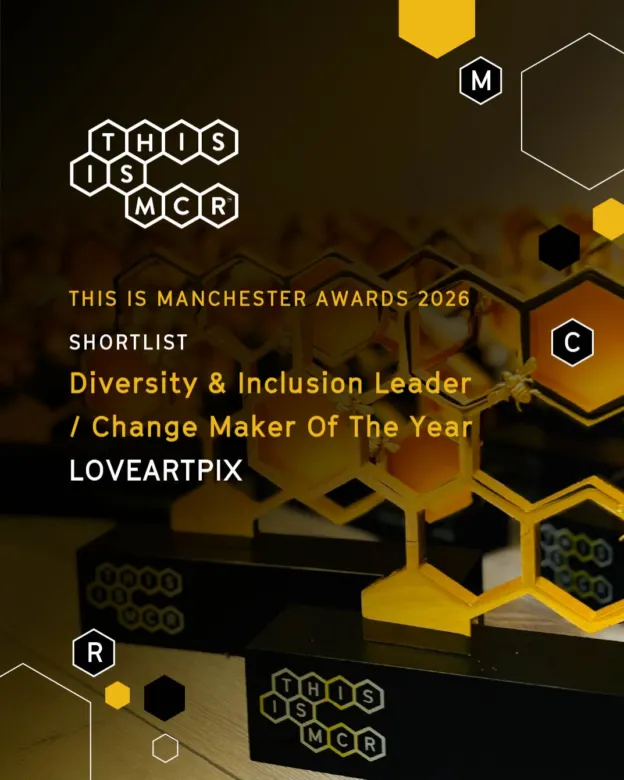
Over the years, my work has received multiple awards and nominations, appeared in exhibitions and led to the creation of my permanent Neurodivergent Perspective Gallery in Manchester, one of only a handful of galleries of its kind in the UK. I’ve used art to develop programmes in schools and prisons, support people in finding their own forms of expression and raise thousands of pounds annually for charities through artwork donations. My work has even led to an invitation to Buckingham Palace for my contribution to education, and an application is currently in process to exhibit in Parliament.
I don’t see art simply as something to hang on a wall. I see it as a way to communicate, start conversations, challenge established perceptions and help change how people understand one another. I have definitely not taken the traditional route. Picsart has helped my ideas travel further than I could ever have imagined.
From an exhibition idea to a film
After years of making digital artwork on the app, I became curious about how Picsart’s newer AI-assisted tools could help me move beyond still images. I already had the ideas and experiences, but I wanted another way to bring them to life.
At the time, I was developing a concept for an immersive exhibition. Rather than simply asking visitors to look at artwork about my experiences, I wanted them to feel as though they were seeing the world through my eyes. How could I communicate something without having to explain it and to make the viewer feel as I feel?
I started experimenting with short moving scenes, building on the visual concepts I’d been creating. One idea led to another, until I had seven brief first-person sequences with no dialogue. As I brought them together, I realised they could tell a story in their own right.
That became Beneath the Surface.
The film is deeply personal, but it isn’t intended only for people who share my experiences. It asks audiences to look beyond appearances and consider what another person may be carrying.
Making it independently was just as important as the finished film. A conventional production would have involved actors, a crew, special effects, substantial funding and repeatedly explaining painful experiences to others in the hope that they could represent them accurately. For me, that process would have been overwhelming, triggering and very traumatic.
Working with Picsart meant I could experiment privately, in my own time, change things when they didn’t feel right and retain control over how the story was told. The AI-assisted tools helped me translate my concepts into moving images. They didn’t provide the memories, the meaning or the creative direction. Those all came from me.
I’m also the subject and executive producer of Autism: The Gift in the Curse, a multi-award-winning documentary produced by Eklectics. That gave me experience working with a professional film team. But Beneath the Surface was different. I created it myself with tools I had spent years learning.
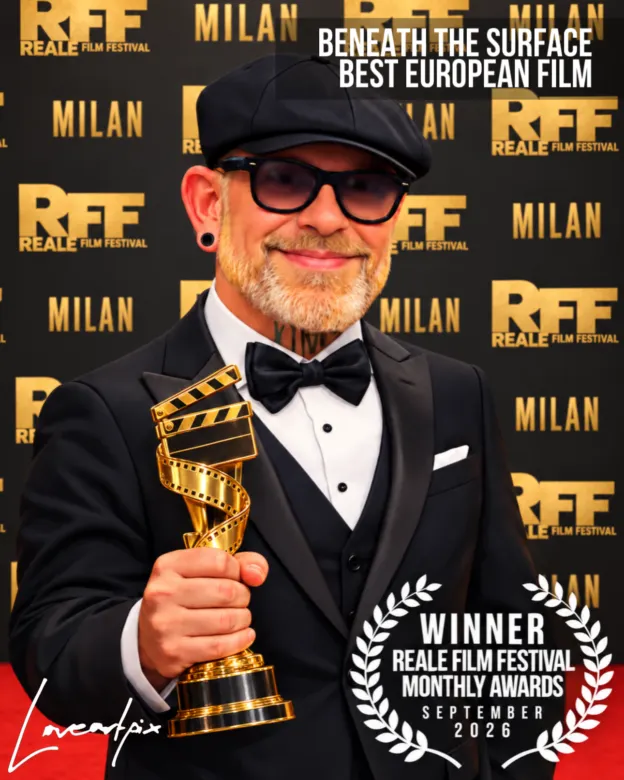
When it was finished, I was proud simply to have found a new way to communicate something that had been difficult to put into words. But I never expected it to win Best European Film at the Reale Film Festival in Italy.
An idea that began as an immersive exhibition concept had become an internationally recognised film.
What creative freedom can change
There’s a lot of discussion about AI and what it means for artists and I understand why. But there’s another question I think deserves more attention: what happens when someone has the creativity and the ideas, but not the money, training, resources or circumstances needed to follow a conventional path?
Accessible creative tools don’t remove the person behind the artwork. They can help that person be heard.
I see that beyond my own work, especially in The Hero Within, a school programme I’ve developed to help children explore their identities and build confidence through art. In a way, that brings me back to why Hov wanted to create Picsart for his daughter in the first place. Everybody deserves the opportunity to create without being made to feel their ideas aren’t worth sharing.
I didn’t begin this journey hoping for awards, a gallery or an invitation to Buckingham Palace. I began because I needed to understand and express myself. Art then became my way into education, rehabilitation, charity work and conversations about how society treats people who experience the world differently.
Technology didn’t give me my creativity. It helped my creativity reach places I once thought were impossible.
And Beneath the Surface is another reminder that you never really know how far a personal idea might go.
Creativity without limits
Loveartpix’s journey is a reminder that powerful stories don’t always need big budgets, professional studios, or traditional creative training. Sometimes, they begin with a personal experience, a clear vision, and the freedom to experiment.
From creating digital art on a phone to winning international recognition for Beneath the Surface, Dez has shown how accessible creative tools can help turn deeply personal ideas into something that resonates far beyond the artist.
At Picsart, creativity is about giving people the freedom to express themselves in their own way. Explore what’s possible with Picsart and discover where your next creative idea could take you.


