
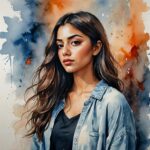

You start on one cinematic shot – a warm, sun-lit portrait – and then it flickers, fast, into a second clip of the open sea, then back, then out again, all in rhythm with the sound underneath. The two videos never fully settle; they keep flickering into each other until they read as a single moving moment. It’s not a hard cut and it’s not a slow dissolve – it’s a fast, musical flicker that laces two clips together.
That’s the cinematic flicker trend: you take two good-looking clips and flicker between them in time with a trending sound, so the two videos blur into one cinematic memory.
Creator @tudi.jpeg set the tone – a golden, windswept portrait flickering into shots of the sea, timed to the sound, captioned “Sun, Wind and Memories,” spreading fast across TikTok and Reels.
What is the cinematic flicker trend?
Three things make it:
- Two cinematic clips – not random footage, but two nice-looking, moody shots that feel like they belong together, like a portrait and a landscape.
- The sound leads – the whole edit is built on a trending sound, and the flicker is timed to its rhythm rather than cut at random.
- The flicker weave – the two clips are cut into short pieces and flickered into each other, fast, so they read as one clip breathing between two images.
In one sentence: pick two cinematic clips, drop a trending sound under them, and flicker between the two in time with the audio.
View this post on Instagram
Why it works
- It feels cinematic, not edited. Because both clips are already beautiful and the flicker rides the sound, it plays like a film moment rather than a cut-up video.
- The sound does half the work. Building on a trending audio gives the edit rhythm and reach before you touch a single frame.
- Two clips, one feeling. Flickering a face into a place lets you tell a whole mood – “sun, wind, memory” – without a caption or a story.
- It loops. There’s no hard start or finish, so the flicker just keeps breathing between the two clips on repeat.
How to make it in Picsart
Step 1: Pick your two cinematic clips
Choose two good-looking, moody shots that pair well – a warm portrait and a landscape like the sea, sky, or a sunset is the classic combo. Shoot them cinematic: soft light, slow movement, a bit of grain-worthy warmth. You only need a couple of seconds of each.
Step 2: Drop the sound in Video Editor
Open Picsart Video Editor, start a vertical project, and add the trending sound you want to build on first – the whole flicker gets timed to it, so it goes down before the clips.
Step 3: Flicker the two clips in time with the sound
Add both clips, then split them into short segments and interleave them – clip one, clip two, clip one, clip two – lining each little cut up with the beat so the flicker pulses with the audio. Shorter, even pieces on the strong beats give you that fast, musical weave.
Step 4: Grade it cinematic and export
Add a warm filter and a touch of grain so both clips share one film-like look, balance the levels so neither flash jumps out, then export vertical for Reels and TikTok.
Getting the flicker right
The trend lives in how the flicker rides the sound, so keep these in mind:
- Let the sound set the pace. Flicker faster on the busy part of the audio, slower on the calm parts – matching the sound is what makes it feel cinematic instead of glitchy.
- Pair clips that share a mood. Two shots with similar color and light flicker into one look; clashing footage just reads as two separate videos.
- Keep the pieces short and even. A few frames each is the sweet spot for the flicker – longer and it turns into ordinary cutting.
- Match brightness between the two. Close exposure on both clips keeps the flicker smooth rather than strobing harshly.
- Go easy for sensitive viewers. A very fast, high-contrast flicker can be a lot – keeping the two clips close in brightness makes it more comfortable to watch.
Variations worth trying
- Face and place. The classic – flicker your portrait into a location that means something, like the sea, a city, or home.
- Then and now. Flicker an old clip into a recent one for a memory or glow-up edit.
- Two people. Weave two people’s clips together for a “you and me” version.
- Full montage. Flicker through three or four cinematic clips instead of two, so the memory keeps shifting under the sound.
Two videos, one sound, one cinematic memory.
The cinematic flicker trend turns two nice clips and a trending sound into something that feels like a film moment – two videos flickering into each other until they read as one.
Pick two cinematic clips, drop the sound, flicker them together.
Try it in Picsart Video Editor.


