
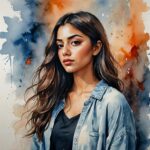

You can turn a single photo and a few sentences into a polished podcast video in minutes – no mic, no set, and no editing timeline. That is the whole promise of learning how to make an AI podcast video with Picsart Flow. Drop in a picture and a short piece about your subject, and the AI builds an on-screen podcaster, writes a tight voiceover, and produces a vertical clip ready to post. The entire thing runs inside one template, so you skip the usual scramble of gear, scripting, and post-production.
For anyone who has wanted to add video to a show but stalled at the cost of cameras, lighting, and editing, this closes the gap. The output is a vertical clip built for feeds – the kind of asset that used to take a recording setup and an afternoon of edits, now handled in a single run. This guide keeps it practical: exactly how to make a video podcast clip, how to get your two inputs right, and a handful of reel ideas worth trying first.
How to make an AI podcast video with Picsart Flow
Here is how to make a podcast video with AI from a blank canvas to an exported clip. Every step happens on one canvas, so the whole process stays fast.
- Open the template.
Head to the Podcaster Generator template in Picsart Flow and clone it into your own canvas so you have an editable copy to work from. - Add a photo.
Upload the image you want as your podcaster. This picture becomes the on-screen host, so pick something clear and well-lit where the face is easy to read. - Type your topic.
Paste a few sentences about your subject – the demo uses a short piece on generative AI. This text is the source the voiceover is written from, so it shapes everything the host says. - Run the workflow.
One action generates the AI podcaster, condenses your topic into a voiceover script, and produces the talking podcast video. Give it a moment to build all three pieces together. - Review and iterate.
Watch the clip back, then adjust the photo or rework the topic text and run it again. Small changes to the inputs refine the host, the script, or the delivery until it feels right. - Export.
Download the vertical clip for your feed. Exporting means signing in to a Picsart account first, so keep that step in mind before you publish.
That is the full loop. It runs on Picsart Flow, a no-code AI canvas where the template arrives pre-built, so you are shaping content rather than wiring a pipeline. Prefer to start from the canvas itself? Open the Flow editor and load the template there. Because the whole thing lives on one canvas, running a second or third version costs almost nothing – swap an input, rerun, and compare.
What the template gives you
Running it once produces three assets, not just a video. Each one covers a job you would normally handle separately:
- An AI podcaster. A studio-style host generated from your photo, set in a podcast scene with headphones, a mic, and warm lighting.
- A voiceover script. Your topic condensed into a tight, spoken script the host delivers, so you never have to write the narration yourself.
- A vertical video. The finished talking-podcaster clip, sized for reels and stories and ready to export.
Getting the host, the script, and the clip from a single run is what turns a rough idea into a post-ready reel in one pass – no separate scripting doc, recording session, or edit required.
Get your topic and photo right
The template does the heavy lifting, but the quality of an ai podcast video still comes down to the two things you feed it. A little care here is the difference between a flat clip and one worth posting.
Start with the topic text, since the voiceover is written straight from it. Lead with your most interesting line so the script opens on a hook, keep it to one clear idea rather than a broad overview, and write the way you actually talk – short, spoken sentences beat dense paragraphs. A focused topic gives the AI a tight, confident script; a rambling one gives you a rambling clip. If you already have episode notes, pull the single strongest takeaway and start there instead of pasting the whole outline.
Then choose the photo that becomes your host. A sharp, well-lit, front-facing image reads as a far more convincing on-screen podcaster than a dim or busy shot. Simple backgrounds work best, since the face is the focus, and a consistent photo across clips keeps a whole series looking like one show. Get these two inputs right and the finished ai video podcast clip needs almost no second-guessing.
Podcast reel ideas to make with it
Once the workflow clicks, the question becomes what to point it at. These reel formats all start from a single topic input, so each one is a fresh run of the same template.
- Episode teaser. Feed it the hook of your latest episode to build a podcast trailer that sends people to the full show.
- Hot take. Turn one strong opinion into a standalone clip – short, punchy, and built to spark comments.
- Answer a listener question. Drop in a question and your answer for a quick, useful podcast reel that shows your expertise.
- Tip of the week. Share one practical tip per clip and post it on a schedule to build a repeatable series.
- Guest or topic intro. Tease an upcoming guest or theme as a podcast teaser that warms up your audience before release.
The thread through all of these is focus: one idea per clip, run through the template, out the other side as a finished video. Keep the same host photo across them and the set reads as one cohesive show, which is what makes this approach genuinely useful for podcast marketing.
Open the topic text with your most interesting line so the voiceover grabs attention in the first second. One clear subject per clip reads far better than a broad overview that tries to cover everything. A sharp, well-lit image makes a more convincing on-screen podcaster and a more polished clip. Rerun the template with the same host photo for each new topic to hold a consistent look across your feed. Open the Podcaster Generator template in Picsart Flow, clone it, add a photo, and type a few sentences about your topic. Running the workflow generates the AI podcaster, writes a voiceover script, and produces a vertical talking-podcaster video you can export.Tips for a stronger podcast video
Lead with a hook
Keep the topic focused
Use a clean photo
Make a series
Get answers to common questions
Start making podcast videos today
A single Picsart Flow template turns a photo and a topic into a podcast video in minutes – no mic, no set, and no editing required. Clone it, add your image, type a few sentences about your subject, and run it to watch an AI podcaster reel come together. Ready to try it? Make your first AI podcast video with Picsart Flow.


