


A strawberry is sobbing into a tiny pillow. A banana in an open shirt walks away dramatically. 39 million people have watched it happen.
Welcome to AI fruit stories.
This is the trend that turned produce into reality TV stars – and somehow became the most-watched AI content on TikTok and Instagram. Among the biggest accounts riding the wave is @ai.cinema021’s “Fruit Love Island” – an AI-generated parody where every contestant is a fruit with a face, a voice, and deeply chaotic emotional problems.
The numbers speak for themselves:
- 3.2 million followers in roughly a week
- Episodes pulling tens of millions of views
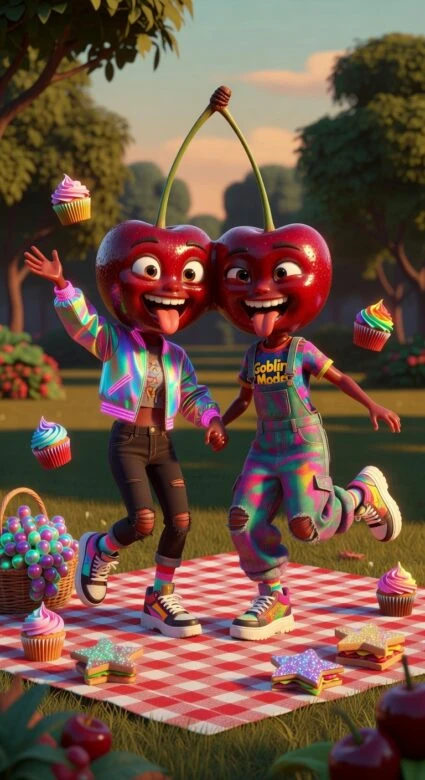
- Characters like Strawberina, Bananito, and Cherrita with actual fandoms
It’s absurd. It’s unhinged. And it works – because people will watch anything if you give it a face and a storyline.
What are AI fruit stories?
Short-form videos where fruits get turned into characters with faces, voices, and full narrative arcs.
Think:
- A strawberry living her soft life – morning routines, spa days, “romanticizing my life” vibes
- A banana documenting his villain arc after being left to rot
- An avocado going through a glow-up era after a breakup
The format ranges from reality TV parodies to standalone skits, mini-series, and educational content. The formula is simple: take something mundane, give it human emotions that are way too intense, and let the drama unfold.
This didn’t come from nowhere. AI character content has been building all year – cat ninja videos, brand parody memes. But fruit stories hit different because they add serialized storytelling. People don’t just watch one video. They follow the plot. They pick sides. They come back for the next episode.
Why a banana with emotional baggage breaks the internet
The absurdity is the hook. A banana walking away from a crying strawberry is objectively ridiculous. But the production quality – the lighting, voice acting, cinematic framing – treats it dead seriously. That gap between absurd content and serious execution is what stops your thumb mid-scroll.
Characters create loyalty. One-off videos get views. Characters get followers. Bananito does something shady in episode 12? People come back for episode 13. The “Fruit Love Island” account gained 3.2 million followers in a week because people wanted the next episode.
It’s a template anyone can use. The format isn’t locked to fruits or dating shows. Any object can become a character. Any scenario can become a storyline. Creators are already spinning off versions: vegetables in office dramas, snacks in heist movies, skincare products having existential crises.
Brands are already in. Walmart Canada posted a banana on a pile of apples captioned “Just spotted Bananito with Applelina. Poor Strawberina.” When brands reference your characters by name, the trend has gone mainstream.
Beyond the drama: where AI fruit content actually goes
The love triangles get the views. But the format goes way beyond TikTok drama.
Marketing. Turn your product into a character. Let it sell itself. A serum doesn’t need an ad – it can explain itself mid-monologue while going through a character arc. Product-as-character marketing is already happening.
Education. A lemon explaining citric acid is more engaging than a diagram. Teachers are using the format to simplify complex topics – and kids actually watch the whole thing.
Self-expression. Not everyone wants to be on camera. AI characters let creators share emotions and humor through a character instead of their own face. Faceless content with personality.
Entertainment. Mini-series. Recurring characters. Seasonal arcs. Creators who treat it like a show – not a one-off post – are the ones building audiences.
How to make your own in Picsart
Picsart Persona is built for this. AI characters with consistent identity, turned into video content. Here’s how.
Step 1: Build your character
Go to Picsart AI Influencer Studio and choose the Fruit Friends vibe. Pick your fruit. Customize the scene, mood, outfit, and personality. This is where you decide if your character is living a soft life or plotting revenge.
Step 2: Describe your video
This is the key. Don’t write “banana walks around.” Write the scene like a director:
- “A banana in a leather jacket walking into a rooftop party at sunset, slow camera push, moody lighting, lo-fi music playing”
- “A strawberry in a bubble bath reading a self-help book, soft afternoon light, gentle zoom in”
- “An avocado staring at old photos on a park bench at dusk, wind blowing leaves, melancholic piano”
More detail = better output. Add movement, setting, mood, and sound.
Step 3: Generate your content
Persona creates a full video with audio. Want more control? Send it to Picsart’s Video Generator – try different models, adjust pacing, generate variations until you nail the scene.
Step 4: Final touches and post
Add captions – the dialogue is half the content. Loop short videos for better completion rates. Building a series? Keep your character consistent. End on a cliffhanger. The algorithm rewards watch-through and return viewers.
The fruit is the character. The story is yours.
Strawberina didn’t blow up because she’s a well-rendered strawberry. She blew up because someone gave her a personality, a storyline, and a reason to come back next episode.
The AI handles animation, lighting, and voice. It doesn’t write the drama. It doesn’t decide Bananito gets a villain arc or that Cherrita deserves better. That’s all the creator.
The tools are the same for everyone. What separates 200 views from 39 million is the story behind the fruit.
Give your avocado a personality. Give your banana a motive. Describe the scene like a movie. Hit generate.


