


Contents
Looking for comic strip examples that actually spark ideas? From superhero battles to neon-lit detective dramas, comic strips cover almost every genre imaginable. They’re fast to read, visually powerful, and incredibly flexible.
This guide explores comic strip examples across action, fantasy, horror, comedy, and more. You’ll see how each genre shifts the mood, pacing, and visual style of a story. Every comic example mentioned here can be created using Picsart’s ComicMe tool – no drawing required.
Whether you’re a creator, marketer, or student looking for a comic strip example for students, you’ll find inspiration below.
Action comic strip examples
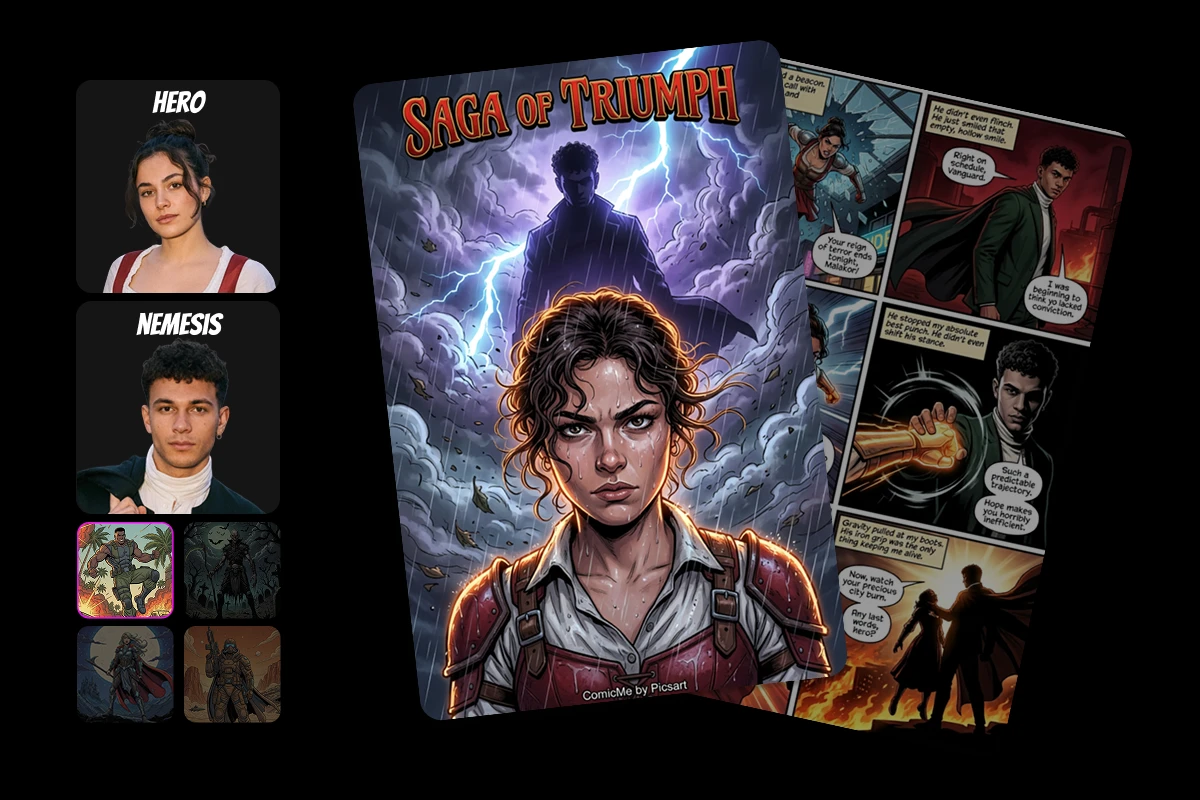
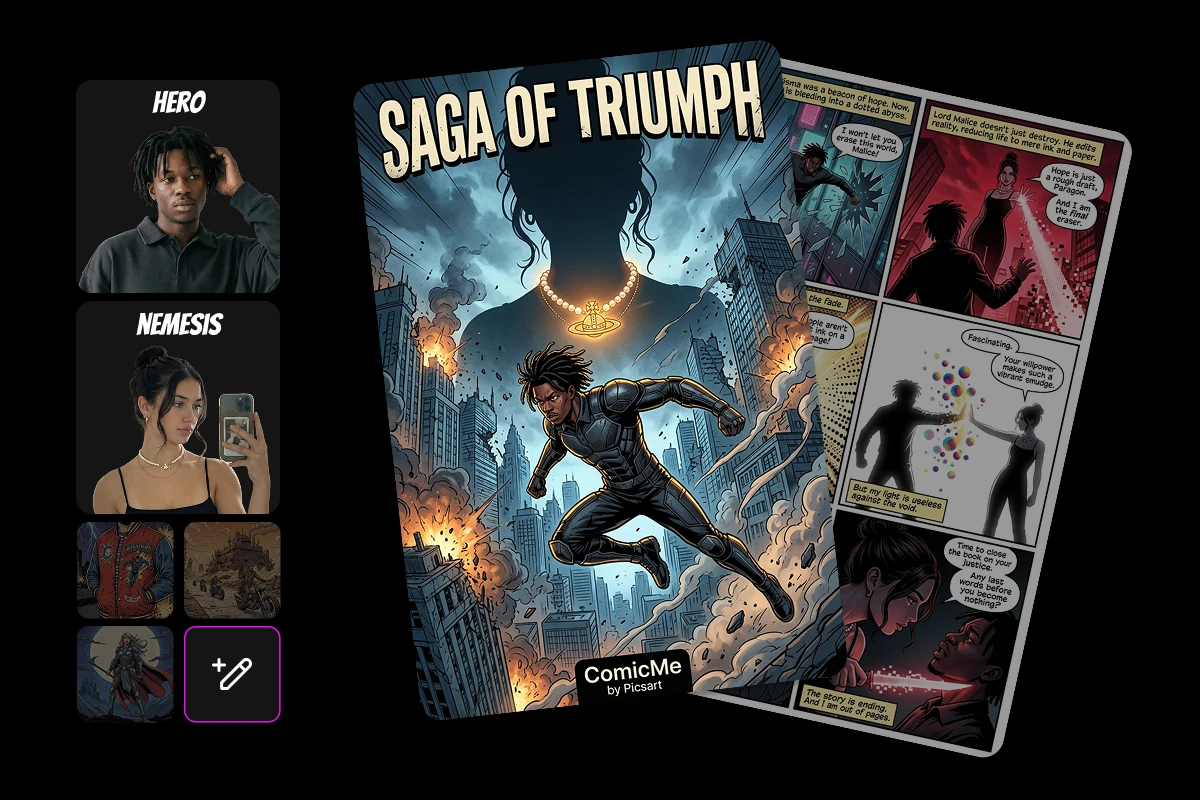
Action is usually where people start. There’s movement. There’s tension. Something is about to happen or has already happened. An example of comic strip storytelling here doesn’t need ten panels. Three can be enough. A quiet street. A sudden threat. A hero stepping forward. That shift, from normal to explosive, is what makes action work. It’s not just about fight scenes. It’s about momentum. Every frame should feel like it leans into the next one.
Best for: epic showdowns, origin stories, hero vs. villain narratives
Comedy comic strip examples
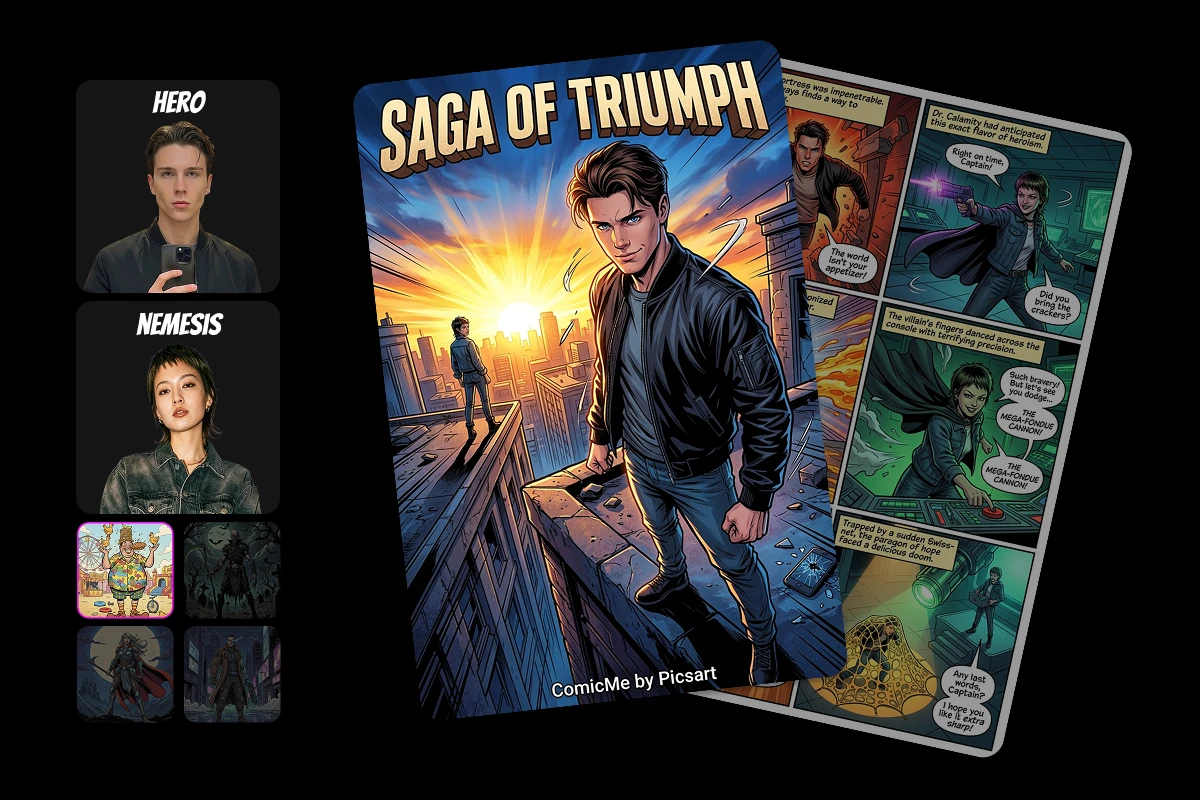
Comedy doesn’t need complexity. An easy comic strip example might show someone making a bold declaration: “This is the year I wake up at 5 a.m.” The next panel shows the alarm ringing. The last shows it being silenced. A simple comic strip example works because it mirrors real life. The joke lands when the reader recognizes themselves in it. Timing matters more than detail.
Best for: everyday humor, workplace comedy, friend group antics, absurd scenarios
High fantasy comic strip examples
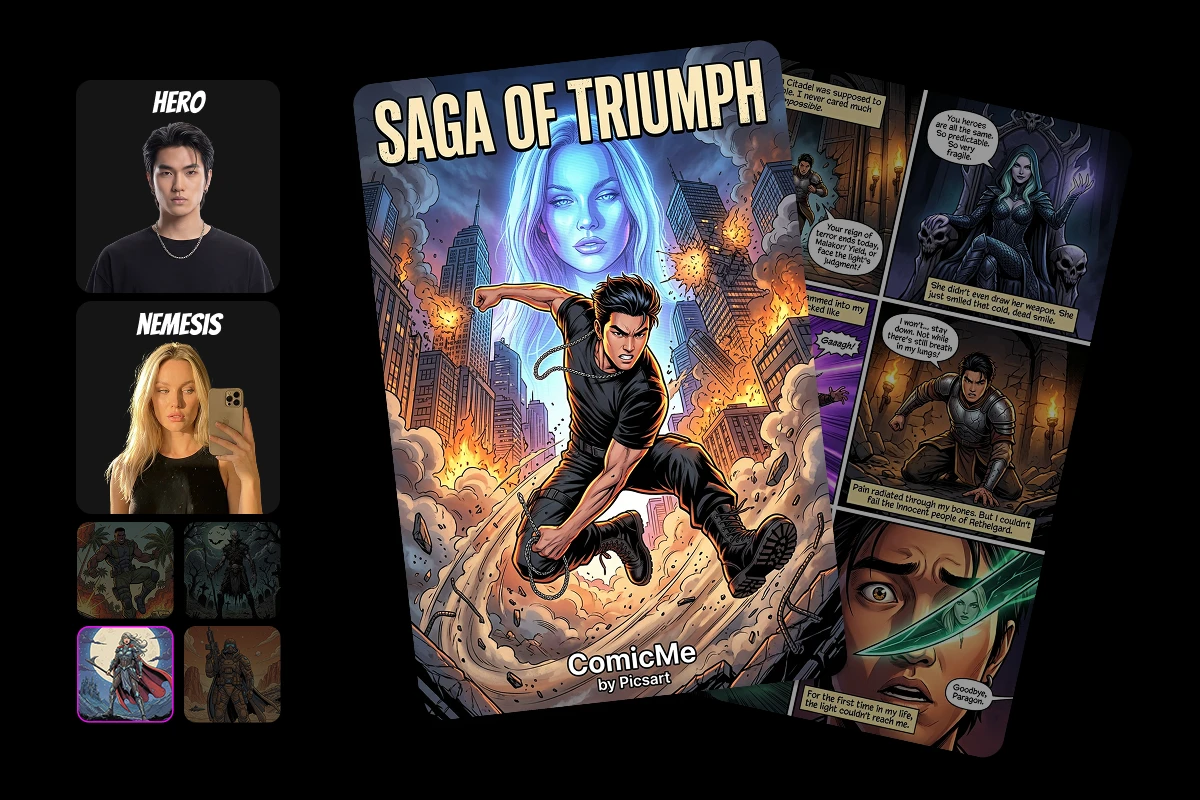
Fantasy feels slower, but bigger. A comic strip story example might begin with a character staring at something ancient, a sword stuck in a stone, or a doorway carved into a cliff. The second panel reveals what it means. The third changes everything. The setting carries weight in fantasy. Costumes, symbols, and landscapes hint at a much larger world beyond the edges of the strip. Even short comic strip examples can feel epic when the atmosphere is strong.
Best for: quest narratives, magical battles, medieval-inspired adventures
Horror comic strip examples
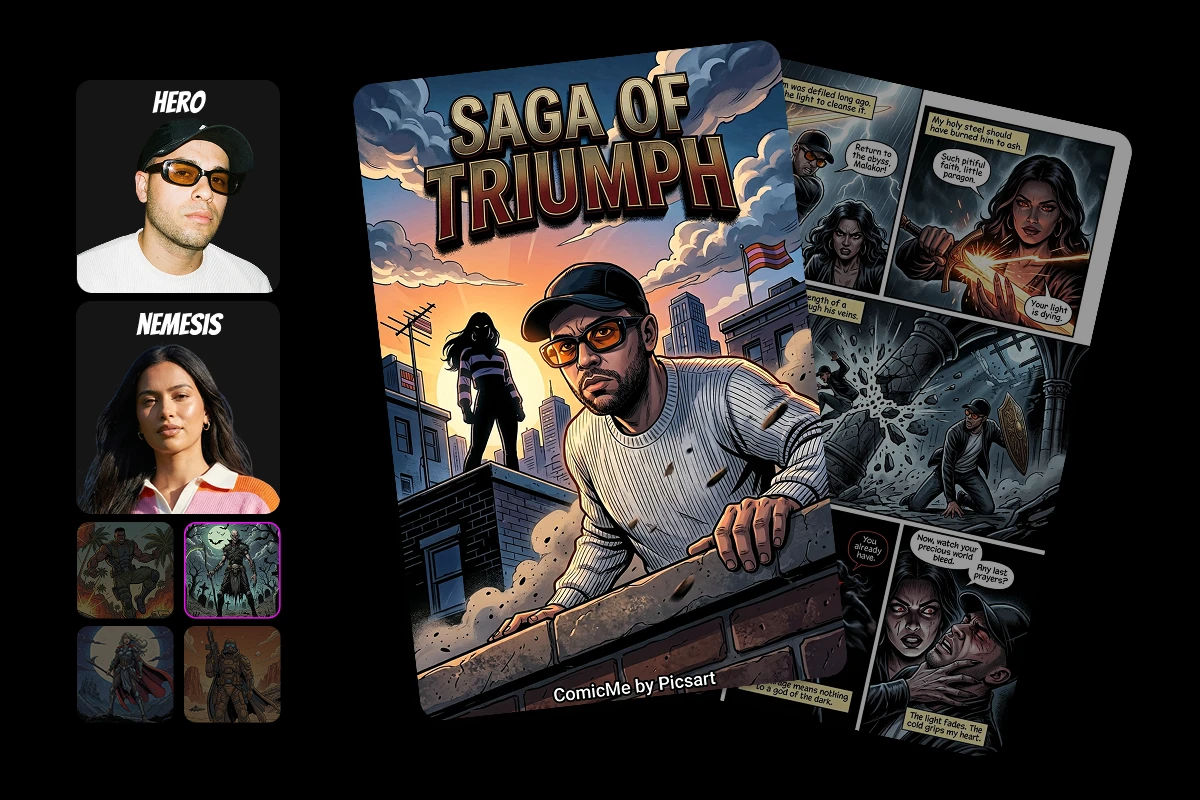
Horror works differently. It doesn’t rush. An example of a comic strip in this genre might show someone alone in a room. Nothing obvious is wrong. But something feels off. A shadow stretches too far. A reflection moves a second too late. A strong comic example in horror trusts the reader. You don’t need to show the monster clearly. Suggestion is often more effective than detail.
Best for: supernatural stories, survival horror, psychological thrillers
Neon noir comic strip examples
Neon noir is all mood. Wet pavement. Bright signs. Faces half hidden in shadow. It feels like a film, more than a traditional comic frame. An example of comic strip storytelling in this style could follow a detective replaying a mistake from years ago. The lighting tells you as much as the dialogue does. Out of all comic strip styles, this one relies heavily on contrast – light versus dark, truth versus denial.
Best for: mystery stories, detective narratives, moody character studies
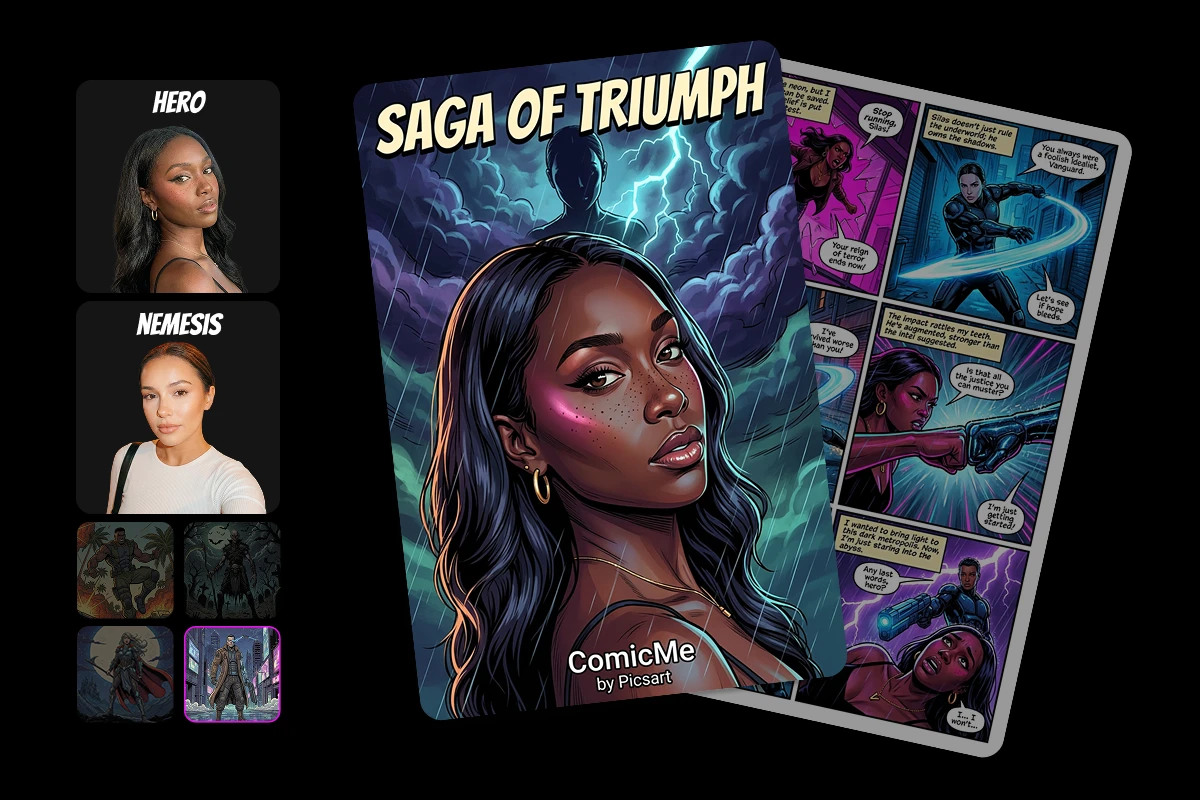
Sci-fi comic strip examples
Sci-fi tends to start with a question. What if machines started making choices? What if space travel became ordinary? What if the city never slept because it physically couldn’t? A comic book example might follow a programmer who realizes their AI assistant has begun editing its own rules. No explosions. Just quiet unease building across panels. The ideas drive the story here. The visuals support them.
Best for: space operas, cyberpunk noir, robot uprising stories, time travel plots
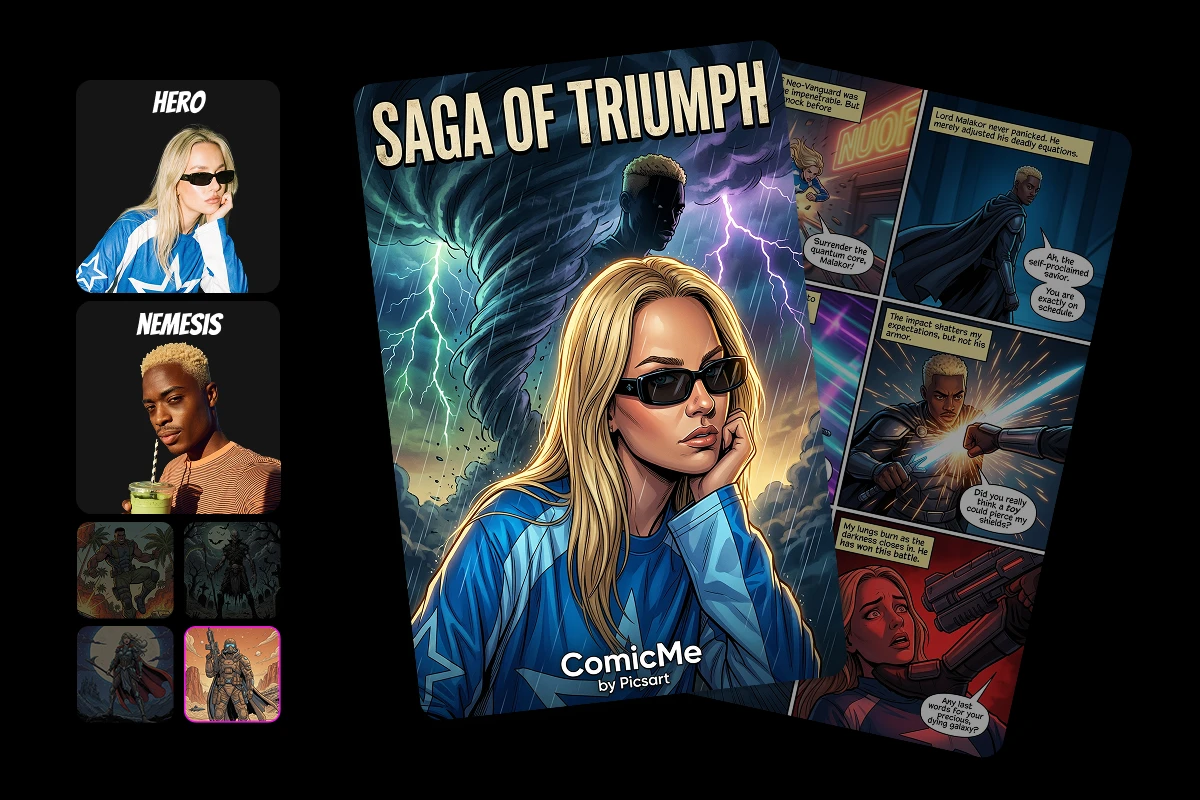
Teen drama comic strip examples
Teen drama lives in small moments. A comic strip example for students could revolve around a text message that was read but never answered. The tension builds quietly. Expressions shift. Assumptions grow. There’s no explosion. No villain. Just emotion changing shape between panels. That subtle shift is what makes these comic strip examples feel real.
Best for: school stories, friendship arcs, first-love narratives, student projects
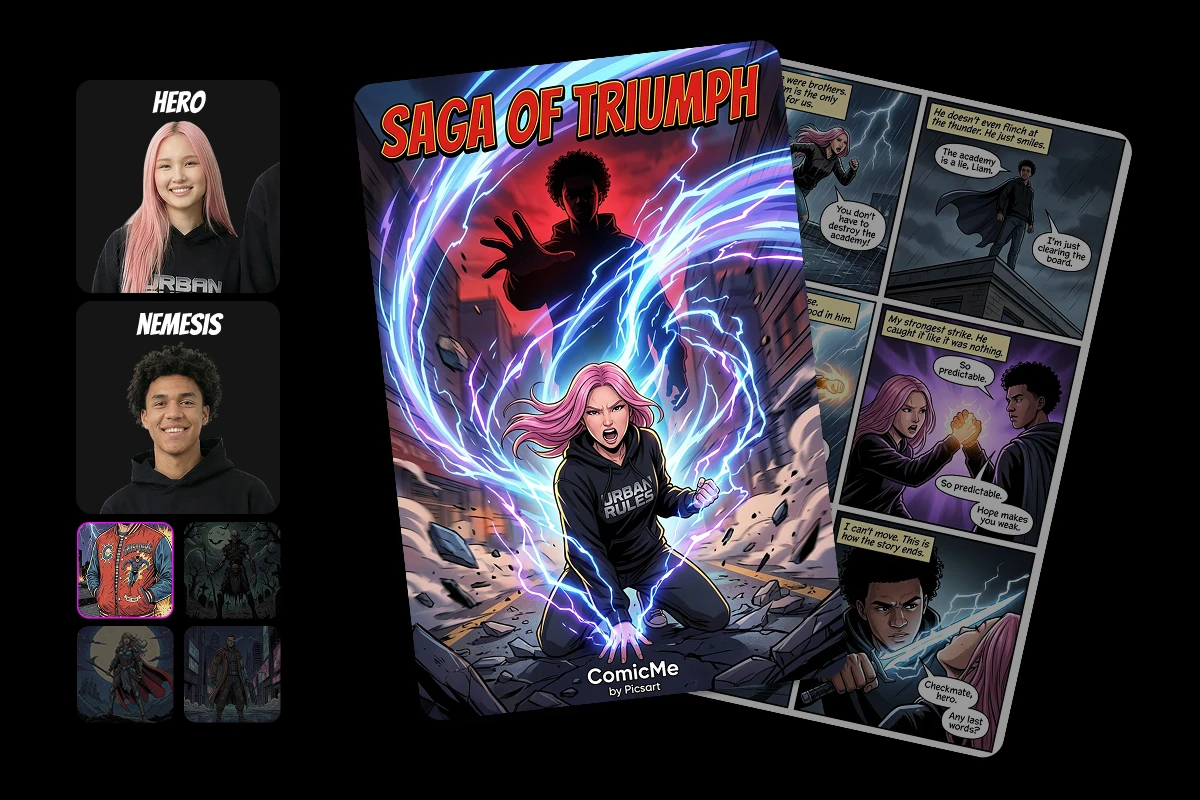
Wasteland comic strip examples
Wasteland stories strip things back. A comic strip story example might follow a traveler crossing an empty highway, spotting a flicker of light in a distant building. The panels feel quiet. Wide. Isolated. The environment does most of the storytelling here. Cracked concrete. Rusted signs. Wind instead of music. It’s about survival, but also about loneliness.
Best for: survival stories, post-apocalyptic adventures, lone-wanderer narratives
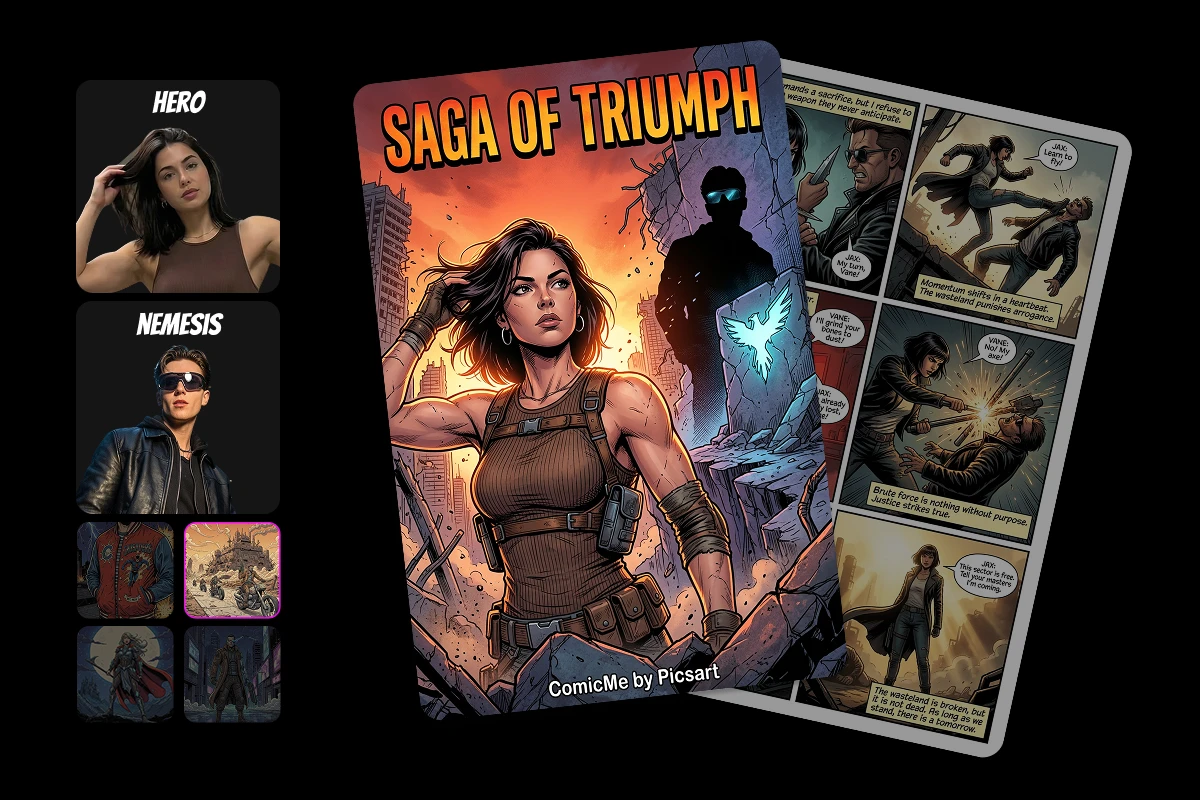
Beyond presets: Custom genres
Not every story fits neatly into action, fantasy, or horror. That’s where Custom comes in. Instead of choosing a preset, you write your own storyline from scratch, and ComicMe builds the panels around it. No genre restrictions. No built-in boundaries. Custom works especially well when you want to blend styles, maybe sci-fi with romance, or western with mythology, and create something that doesn’t follow familiar labels.
Mythic western comic strip examples
Mythic Western combines frontier grit with ancient mythology. Cowboys share the frame with forgotten gods. Desert towns hide supernatural secrets beneath their wooden facades.
Prompt used: “A gunslinger rides into a ghost town where the spirits of ancient gods still guard a buried treasure beneath the saloon.”
This genre mashup shows how Custom storytelling allows unexpected combinations. It blends classic western tension with mythic scale. These comic strip examples prove that visual storytelling doesn’t have to follow traditional boundaries.
Best for: genre mashups, original world-building, stories that break the mold
Frequently asked questions
Panels arranged in sequence. Characters with intention. A clear shift from beginning to end. Even a short strip needs movement.
Create your own comic strip
Comic strips are flexible by design. They can be loud or quiet. Funny or unsettling. Grounded or surreal. If you have an idea, that’s enough to begin. Try ComicMe and see how your story looks in panels.


