
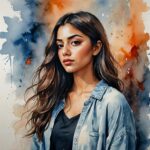

Grok Imagine built its reputation on sharp photorealism and text that actually reads. It is still worth using, and it now sits in Picsart AI Playground alongside Grok Imagine 2 and Grok Imagine Quality, so you no longer have to choose between it and everything else.
What has changed is that it is no longer the obvious answer to every brief. Grok Imagine is strong on photorealistic output and narrow on style, so anime, watercolour, pixel art and illustrated looks land better elsewhere. The best all-round alternative is GPT Image 2.5, which matches the photorealism and adds editing that holds the rest of the frame still while you change one thing.
This post covers six models worth testing, each built for a different job. If you are looking for apps like Grok, and a free one to start with, they are all here. All of them run in Picsart AI Playground, which puts more than 220 models behind one prompt bar, so you can put the same prompt through several and keep whichever answer fits.
Find the best Grok Imagine alternative for what you need
Every model here generates images from a text prompt. What separates them is where each one is strongest.
Best for versatility and editing: GPT Image 2.5 (OpenAI)
GPT Image 2.5 was tuned to change only the element you name and hold everything around it steady. That makes the preservation half of a prompt do as much work as the request: you name one change, then list the identity, geometry, lighting and copy that stay exactly as they are.
Editing is where it makes its biggest leap, and the stability holds across a conversation. An earlier edit survives the next one instead of the picture degrading over a long back and forth, so you can refine step by step and trust what you already approved. It reaches up to 4K with a 3840px maximum edge, takes aspect ratios from 1:3 to 3:1 across nine presets plus auto, and accepts up to 16 reference images. There is a Flare variant tuned for speed and a Sunburst variant tuned for precision.
Where it falls short: if you want painterly, heavily stylised artwork, Seedream 5.0 Pro handles that better. But as an AI image editor like Grok, covering the most ground in one place, this is the closest match.
Best for artistic and stylised output: Seedream 5.0 Pro (ByteDance)
If Grok Imagine's narrow stylistic range is what sends you looking, Seedream 5.0 Pro fills that gap. It wins three jobs outright: it writes legible text into an image instead of letter-shaped marks, it holds the same character across a whole set of images, and it edits a photo you already have from a plain description, with no handoff to a separate model.
It runs from 1K up to 4K at standard output, 2048 by 2048, and as far as 8K, and takes up to 14 reference images when you are describing an edit. That combination suits illustration, concept art and branded visuals with a consistent cast. Photorealism does not reach Grok Imagine's depth, so this is the one to open when the look matters more than the realism.
Best for text rendering: Ideogram 4.0
Need signs, logos or typography that read correctly? Ideogram 4.0 generates at native 2K, roughly four million pixels, with no separate upscaling step, and it is fully open weight. It reads hex codes as brand colour and takes a structured prompt rather than a paragraph.
That makes it the one for posters, social graphics and marketing materials where legible text is the whole point. Photorealism is not as deep as Grok Imagine's, and stylisation is more limited, but if text is make or break this is the alternative you want.
Best for fast, high-resolution output: Flux 2 Pro (Black Forest Labs)
Flux 2 Pro is built for speed and scale. It hits roughly four megapixels, reads hex codes as brand colour, and takes a structured prompt, with generation and editing in one pipeline rather than two tools.
For high-volume creative work where you need resolution quickly, it is the best balance of speed and quality here. Text rendering sits below Ideogram's standard, so it is a workhorse rather than a showpiece.
Best for free photorealism: Nano Banana 2 (Google)
Nano Banana 2 goes out and fetches what is not already in your frame. Where GPT Image 2.5 protects what is in the picture, this one can pull in outside information, which makes it the right pick when the image depends on something current or real rather than on holding a frame still.
It is built on Gemini 3.1 Flash Image, takes text, images, video and PDF as input, runs aspect ratios out to 8:1 and 1:8, and generates from 512px to 4K. It holds up to five consistent characters and fourteen objects in a scene, with text rendering that localises inside the image. If you want a free AI image generator like Grok with real-world accuracy, this is the most capable option here.
Best for design workflows and vector output: Recraft V4.1
Recraft V4.1 comes in four variants, and one of them does something nothing else on this list can. V4.1 is the expressive raster model for exploring, V4.1 Pro is the high-resolution version for final assets, V4.1 Utility is the controlled-output mode, and V4.1 Vector is purpose-built for logos, typography and illustration that scale without losing a line.
The base model outputs a 1K raster image, accepts a prompt up to 10,000 characters, offers nine aspect ratios and returns up to six images at a time. It takes a source image plus a weight that sets how hard it leans on that image. There is also a Flash version that returns an image in about 1.3 seconds and bills one credit, against two for V4.1, but Flash accepts no reference image at all. Use Flash while you are exploring and V4.1 once a reference matters.
Bottom line
GPT Image 2.5 covers the most ground in one model: photorealism, editing that holds the frame, and stability across a long back and forth. For specific jobs, go to the specialists. Seedream 5.0 Pro for artistic work and character sets, Ideogram 4.0 for text, Flux 2 Pro for fast high-resolution output, Nano Banana 2 for anything needing outside information, and Recraft V4.1 for vectors.
And if what you actually wanted was Grok Imagine, it is in Picsart AI Playground too, alongside Grok Imagine 2 for illustrated and painted styles and Grok Imagine Quality for images that have to survive a close look.
Compare Grok Imagine alternatives at a glance
| Model | Best for | Resolution | Text rendering |
|---|---|---|---|
| GPT Image 2.5 | Versatility and editing | Up to 4K, 3840px max edge | Good |
| Seedream 5.0 Pro | Artistic and stylised | 1K to 4K standard, up to 8K | Strong |
| Ideogram 4.0 | Text in images | Native 2K, ~4MP | Strongest |
| Flux 2 Pro | Speed and scale | ~4MP | Moderate |
| Nano Banana 2 | Free photorealism | 512px to 4K | Moderate |
| Recraft V4.1 | Vectors and design | 1K raster; Vector variant for SVG | Strong |
Try multiple Grok Imagine alternatives with Picsart
Subscribing to several AI models adds up, and switching between them slows the work down. Picsart AI Playground brings more than 220 models into one place so you can generate, compare and edit without breaking your flow.
- Start with a prompt. Open AI Playground and either type a prompt or upload a reference image.
- Choose a model, or let Auto Mode decide. Pick one if you know what you want, or let Auto Mode read the prompt and choose for you.
- Generate and compare. Run the same prompt across several models and put the results side by side.
- Edit without leaving. Refine the result you like in the editor: lighting, layers, background removal, upscaling.
Frequently asked questions
GPT Image 2.5, for most briefs. It matches Grok Imagine on photorealism and adds editing that changes one element while the rest of the frame holds. For artistic work, Seedream 5.0 Pro. For text in images, Ideogram 4.0.


