logo

How to monetize an AI influencer account and earn revenue
AI INFLUENCERS5 minAdvanced

Turn your AI influencer into income through brand partnerships, affiliate marketing, merchandise, and content licensing.

How to monetize an AI influencer account and earn revenue

What you'll learn

  • How to price and secure brand partnership deals for your AI influencer
  • How to set up affiliate marketing and earn commissions
  • How to create and sell merchandise featuring your AI character
  • How to license your AI influencer content to other brands and platforms

What is AI influencer monetization?

AI influencer monetization means turning your digital persona into revenue through the same methods human influencers use — sponsored content, affiliate links, product sales, and licensing deals. The difference is you control 100% of your talent's schedule, image rights, and content output with none of the human limitations.

Common use cases

  • Brand partnerships: Sponsored posts promoting products or services for payment
  • Affiliate marketing: Earn commissions on products your AI influencer recommends
  • Digital products: Sell presets, templates, or guides your audience wants
  • Merchandise: Physical products featuring your AI character's image or brand
  • Content licensing: Sell rights to your AI-generated images to brands or stock sites
  • Subscription content: Exclusive content for paying followers on Patreon or similar platforms

Monetize your AI influencer step by step

STEP 1: Build your audience foundation

  • On web: Track analytics at picsart.com/ai-influencer-studio → "Performance"
  • On mobile: Open Picsart → AI Influencer → Analytics to monitor growth metrics
Track influencer analytics

STEP 2: Choose your revenue streams

Select monetization methods that fit your niche and audience size:

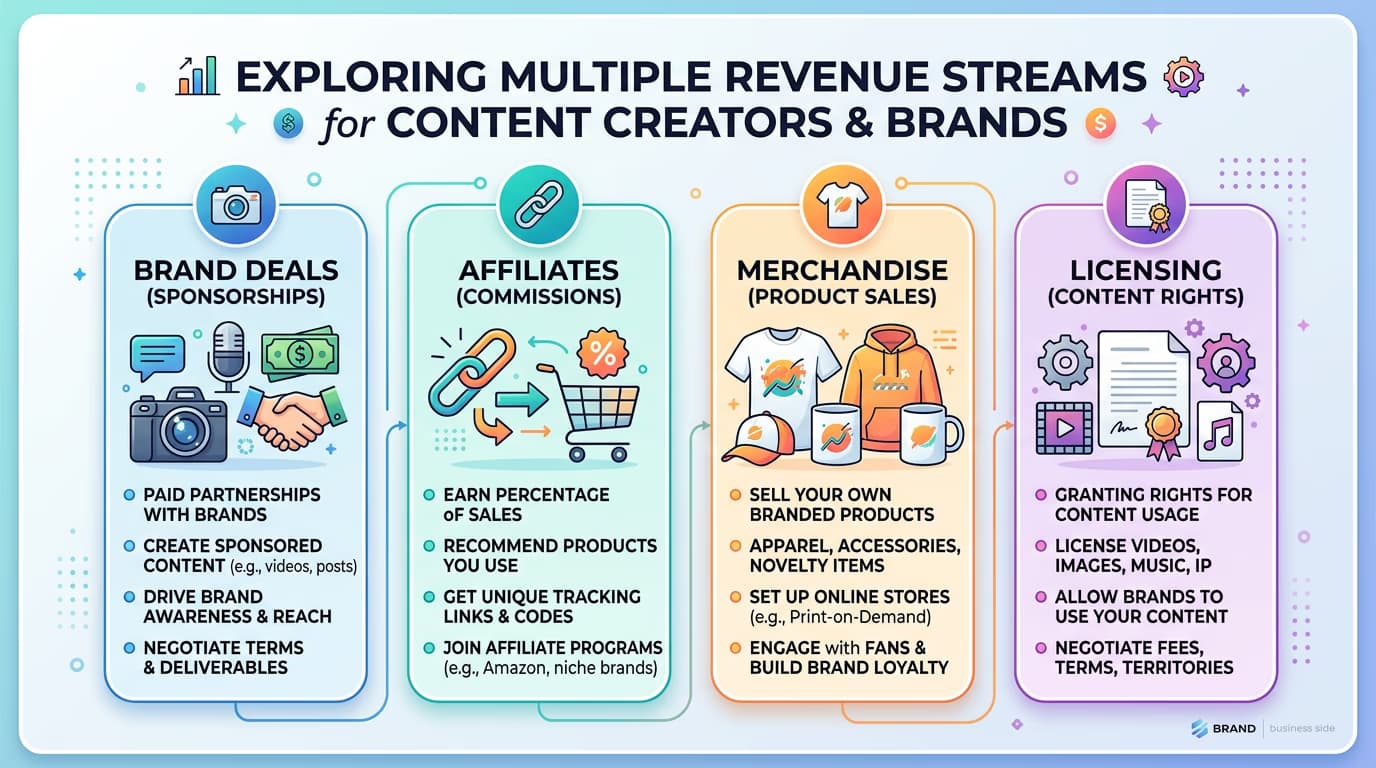
  • Brand sponsorships: 10,000+ engaged followers, charge $100-$10,000 per post based on reach
  • Affiliate marketing: Any follower count, earn 5-30% commission on product sales
  • Content licensing: Sell your AI-generated images to stock sites or direct to brands
  • Merchandise: 5,000+ followers, sell prints, apparel, or digital wallpapers
  • Premium subscriptions: Offer exclusive content on Patreon or similar platforms
STEP 3: Set up monetization infrastructure

Create the business systems you need. Join affiliate programs in your niche (Amazon Associates, RewardStyle, ShareASale). Set up a media kit with your follower count, engagement rate, demographics, and pricing. Create a business email and simple rate card. For merchandise, connect with print-on-demand services like Printful or Redbubble.

STEP 4: Pitch brands and activate revenue

Check that your monetization setup is complete: Not getting responses? Improve your engagement rate, create a stronger media kit, or start with smaller brands to build case studies before pitching major companies.

  • Reach out to 10-20 relevant brands per month with personalized pitches
  • Include affiliate links naturally in posts about products you feature
  • List your content on stock photography sites or pitch licensing directly to brands
Start monetizing

Tips for best results

💡 Focus on engagement rate over follower count

Brands pay for engaged audiences, not vanity metrics. An AI influencer with 15,000 followers and 8% engagement earns more than one with 50,000 followers and 2% engagement. Build real connections through comments, replies, and consistent quality content.

💡 Start with affiliate marketing before chasing sponsorships

Affiliate links require no minimum followers and prove your ability to drive sales. Build a track record of successful product recommendations first. Use these results in your media kit when pitching paid sponsorships to demonstrate ROI.

💡 Price your sponsorships based on value, not just reach

Calculate your worth using engagement rate × follower count × $0.01 as a baseline. Adjust up for niche audiences, professional content quality, or usage rights. Don't undersell — quality AI influencer content with good engagement deserves fair compensation.

💡 Disclose all paid partnerships clearly

Use #ad, #sponsored, or #partner tags on every paid post. This is legally required and builds trust. Successful AI influencers are transparent about both their synthetic nature and business relationships. Audiences respect honesty more than secrecy.

Monetization benchmarks by follower count

  • 1,000-5,000 followers: Focus on affiliate marketing, micro-sponsorships ($50-$200/post), building portfolio
  • 5,000-10,000 followers: Add merchandise, local brand deals ($200-$500/post), content licensing begins
  • 10,000-50,000 followers: Consistent sponsorships ($500-$2,000/post), affiliate income scales, premium subscriptions viable
  • 50,000-100,000 followers: Major brand partnerships ($2,000-$5,000/post), licensing deals, multiple revenue streams
  • 100,000+ followers: Premium pricing ($5,000-$10,000+/post), exclusive partnerships, potential agency representation
  • Engagement rate sweet spot: Maintain 5-10% engagement for maximum earning potential regardless of follower count

Frequently asked questions

You can start earning with affiliate marketing at any follower count, even under 1,000. For paid brand sponsorships, most brands look for 10,000+ engaged followers. However, niche AI influencers with 5,000 highly engaged followers in specific categories like sustainable fashion or vegan food can secure sponsorships earlier because they reach valuable audiences.

Rates vary based on engagement and reach, not whether the influencer is human or AI. Established AI influencers with proven engagement command similar rates to human counterparts. Some brands even pay premium rates for AI influencers because they offer perfect consistency, no scheduling conflicts, and complete creative control over the talent.

Join Amazon Associates and similar affiliate programs immediately. Add affiliate links to products you naturally feature in your content — fashion items, tech, home goods. You earn commissions without minimum followers and build proof of conversion ability. This experience strengthens future sponsorship pitches.

Yes, you own commercial rights to AI images you create with Picsart. You can sell prints, apparel, phone cases, or any physical products featuring your AI character. Use print-on-demand services to avoid inventory costs. Just ensure your AI character doesn't resemble real people or copyrighted characters.

Ready to monetize your AI influencer?

Turn your digital persona into revenue and start building a profitable influencer business.

Start earning now