1. Home
  2. Veo 3.1 vs Kling 3.0

AI VIDEO MODEL COMPARISON

Veo 3.1 vs Kling 3.0: Pick the right AI video model

Google's Veo 3.1 and Kuaishou's Kling 3.0 are shaping how AI video gets created today. This Veo 3 vs Kling 3 comparison helps you understand where each model stands - from video quality and audio to creative control and cost so you can choose with confidence. Try both side by side in Picsart AI Video Generator or AI Playground.

Start generating

Discover more from Picsart
Veo 3.1Kling 3.0KlingSora 2Runway Gen 4Luma Ray 2Seedance 2.0SoraVeo 3.1 FastLuma Uni-1Seedance 1 ProPika FramesWAN 2.7

Use Picsart anywhere

Install the app, or bring Picsart into the AI workspaces your team already uses.

Use Picsart with

  • ChatGPT / Codex
  • Claude
  • Terminal
  • Cursor
  • OpenClaw
  • Hermes

Download the app

Download on the App StoreGET IT ON Google PlayGet it from Microsoft

Follow Picsart

Pinterest
AICPA SOC

Create

  • AI Image Generator
  • AI Video Generator
  • AI Playground
  • Flow
  • AI Photo Editor
  • AI Video Editor
  • AI Agents
  • Content Library
  • AI Models

Creators

  • Earn with Picsart
  • Earn campaigns
  • Clipping
  • For Brands
  • Video Studio
  • Tutorials
  • Challenges

Connect

  • ChatGPT / Codex
  • MCP setup
  • Command line
  • Developers
  • Google Drive

Business

  • Pricing
  • Enterprise
  • Industries
  • Quicktools

Company

  • Support
  • Careers
  • About us
  • Blog
  • Press Center
Terms of UsePrivacy PolicyInternet-Based AdvertisingCommunity GuidelinesDMCASecurity PolicyAccessibility
© 2026 PicsArt, Inc.

Feature comparison overview

Compare Veo 3 vs Kling 3 side by side to understand how their video quality, audio, creative control, and pricing differ for modern AI video generation.

Feature
Primary focus
Max resolution
Max clip length
Native audio
Lip sync quality
Storyboarding
Character consistency
Motion control
Physics simulation
HDR / pro output
Pricing (API)
Best for
Veo 3.1 (Google DeepMind)
Cinematic AI video with native audio
4K (3840x2160) at up to 60fps
8 seconds (extendable with scene chaining)
Full audio: dialogue, SFX, ambient, music
Highly accurate, natural timing
Clip chaining (manual sequencing)
Kling 3.0 (Kuaishou)
Structured storytelling and control
Native 4K (3840x2160) at up to 60fps
15 seconds (up to 3 minutes with extensions)
SFX, ambient audio, and lip-synced speech
Strong, supports multiple languages
Multi-shot generation (up to 6 scenes)

Get familiar with Veo 3.1 and Kling 3.0

At a glance, both models - Veo 3.1 and Kling 3.0 turn text into high-quality video, but they're built with different creative priorities. Veo leans into cinematic generation with built-in audio and consistent characters, while Kling focuses on structured storytelling with multi-shot scenes, motion control, and longer outputs. You can try them both on our AI Video Generator.


Compare video quality, audio, and realism

Both Veo 3.1 and Kling 3.0 generate 4K video at up to 60fps, but they differ in feel. Veo delivers cinematic realism with smooth motion, natural lighting, and consistent characters, while Kling focuses on detailed physics, sharper textures, and HDR-ready output. The biggest gap is audio - Veo produces more natural, fully layered sound with precise lip sync, while Kling supports multi-language audio but feels less refined overall.


Explore storyboarding, motion, and editing tools

Kling 3.0 gives you more hands-on control, with multi-shot storyboarding that creates up to six connected scenes in one go, along with Motion Brush for precise movement and longer clips. Veo 3.1 takes a more automated approach, relying on prompt-based control and clip chaining while maintaining character consistency with reference images. In short, Kling offers more manual control, while Veo focuses on faster, cinematic results.


Break down Veo 3.1 vs Kling 3.0 costs

Kling 3.0 is generally more affordable, with pricing around $0.10 per second and a free tier that offers daily credits, making it easier to scale content production. Veo 3.1 comes at a higher cost, typically between $0.15 and $0.40 per second, and is often included in Google AI plans. Both models are available in one place, so you can try them without managing separate tools or subscriptions.
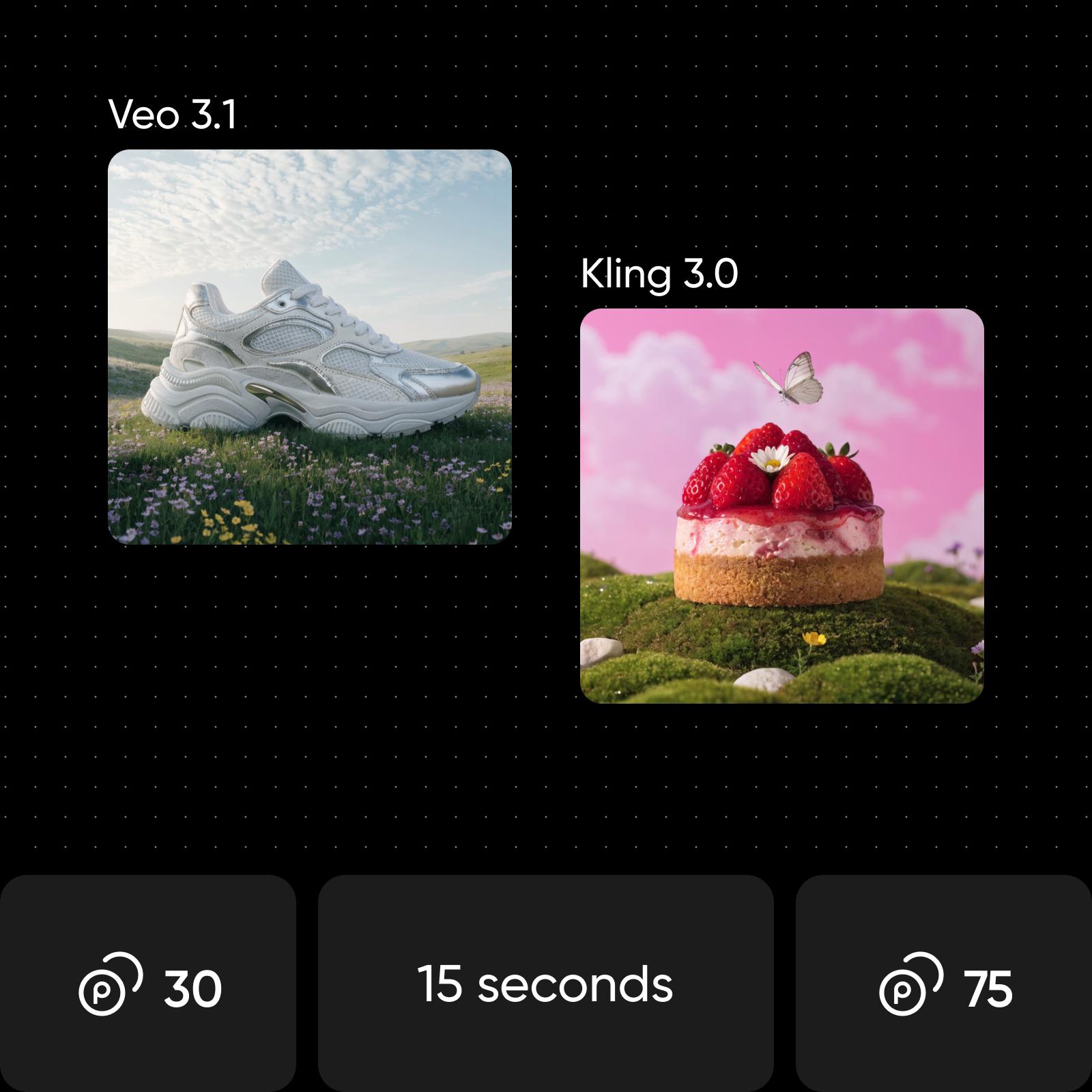
Veo 3 vs Kling 3 pricing comparison

Choose Veo 3.1 or Kling 3.0 for your workflow

Choose Veo 3.1 if you want cinematic results with natural audio, precise lip sync, and consistent characters across scenes, especially for brand videos or polished storytelling. Choose Kling 3.0 if you need more control, with multi-shot storyboarding, longer clips, advanced motion tools, and lower production costs. Choose Picsart if you want both - test Veo 3.1 and Kling 3.0 side by side and use the best model for each project.


Describe the AI video you want to generate
PricingSave big
"Ingredients to Video" (image references)
Prompt-based direction
Cinematic realism (lighting, motion blur)
Not confirmed
~$0.15-0.40 per second
Brand videos, cinematic storytelling
Reference extraction (visual + voice traits)
Motion Brush and camera path control
Advanced physics (gravity, collisions, fabric)
16-bit HDR and EXR export
~$0.10 per second
Ads, social content, multi-scene videos

Understand AI video generation

Learn how prompts, clips, and model choices shape videos.
How to generate AI videos from text prompts with Picsart preview
Video generation

How to generate AI videos from text prompts with Picsart

4 minIntermediate
How to turn photos into AI-animated videos with Picsart preview
Video generation

How to turn photos into AI-animated videos with Picsart

4 minIntermediate
How to create vertical AI videos for TikTok and Reels preview
Video generation

How to create vertical AI videos for TikTok and Reels

4 minBeginner
How to add cinematic camera motion to images with AI preview
Video generation

How to add cinematic camera motion to images with AI

4 minIntermediate
How to extend video clips with AI continuation preview
Video generation

How to extend video clips with AI continuation

4 minAdvanced
Video generation

How to make a short film with AI using Picsart Storyline

4 minIntermediate
See all tutorials